
Introduction
Fire safety is an essential aspect of protecting lives and property, yet many homeowners and small business operators neglect regular testing of fire alarm systems. A properly functioning fire alarm can detect smoke or fire in its earliest stages, providing critical minutes to evacuate safely. Understanding how to test a fire alarm system yourself not only saves money on professional inspections but also ensures you can act promptly if your device fails.
Despite the simplicity of pressing a test button, testing a fire alarm involves more than a single click. It requires understanding the system’s components, electrical functionality, and sensitivity. Neglecting proper testing can lead to false security, potentially endangering lives. This article delves into practical, actionable steps to inspect, test, and maintain your fire alarm system safely and effectively.
Real-life incidents underscore the importance of routine testing. In 2019, a small office in London experienced a fire where the smoke alarm had not been tested for over two years. The delayed alarm contributed to property damage and minor injuries. Conversely, in a New York apartment, a tenant who routinely tested their smoke detector prevented a catastrophic fire, highlighting the critical role of regular maintenance.
Understanding Fire Alarm Systems
Before testing, it’s crucial to understand the types of fire alarms and how they function. Most systems fall into three categories:
1. Ionization Smoke Alarms
These are highly sensitive to flaming fires. They detect smoke particles through an electrically charged chamber. While effective for fast-moving fires, they can be prone to false alarms from cooking smoke.
2. Photoelectric Smoke Alarms
Photoelectric detectors excel at sensing smoldering fires. They use a light beam to detect smoke particles, triggering the alarm when light scatters. They are less sensitive to minor cooking smoke, reducing false alarms in residential settings.
3. Combination Alarms
Many modern devices combine ionization and photoelectric technology to cover a broader range of fire types.
Understanding your system type informs the best testing method, ensuring accurate readings and maintaining compliance with local fire safety codes.
Why Regular Testing Matters
Testing is not just a regulatory formality; it directly impacts survival chances. According to the National Fire Protection Association (NFPA), homes without working smoke alarms double the risk of fire-related fatalities. Testing ensures:
- Batteries are functional.
- Alarm sensors are active and responsive.
- Wiring or interconnections in multi-unit systems remain intact.
Practical Example: A standard smoke alarm uses a 9V battery providing roughly 1 year of service. Testing monthly ensures it has not discharged prematurely, particularly in older units where voltage can drop below operational thresholds.
How to Test a Fire Alarm System Yourself
Step 1: Get the area ready.
Tell everyone in your home or office about the test so they don’t get scared. Turn off any appliances that could set off false alarms, like cooking appliances or HVAC systems that could blow dust near sensors.
Step 2: Use your eyes to look at it.
Check for dust, bugs, or other things that could be blocking the device. Even tiny bits can make sensors less sensitive. Carefully pick up trash with a vacuum that has a soft brush attachment.
Step 3: Check the battery.
Take out each battery from battery-powered alarms and test them with a multimeter. If the reading is less than 9V (for 9V batteries), it means you need to replace it. You need to check hardwired alarms with backup batteries in the same way.
Step 4: Press the Test Button
Push the test button for five to ten seconds. The alarm should make a loud, clear noise. Change the batteries or the whole unit if it doesn’t work.
At 10 feet, your alarm goes off at 85 dB. Every time the distance doubles, the sound gets about 6 dB quieter. At 20 feet, you still get about 79 dB, which is loud enough to wake most people up.
Step 5: Advanced Smoke Test
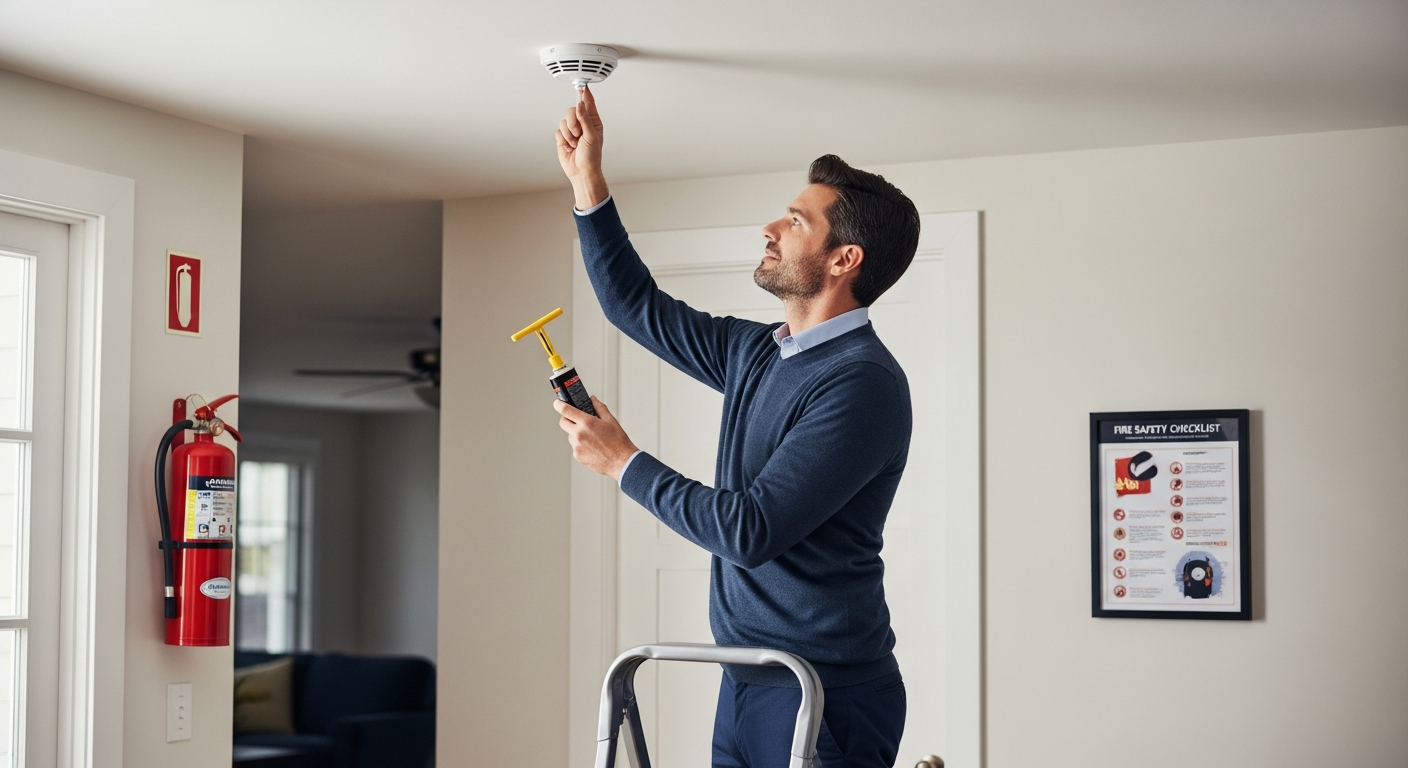
For a more accurate test, use a controlled smoke source or smoke detector test spray. Keep the spray 12 to 18 inches away from the detector to set off the alarm. Don’t use open flames because they could hurt you or break things.
Step 6: Write down your test
Write down the date, the test method, the battery voltage, and any steps you took to fix the problem. Regular logs help make sure that fire safety rules are followed and that professional inspections are done.
How to Avoid Common Mistakes
Just using the button to test: Pressing the button only proves that the sound works, not that the sensor is correct. You should always do a smoke test once a year.
Not paying attention to hardwired systems: If the wiring is broken, hardwired alarms may not work. You need a voltage test or a professional check.
Ignoring Environmental Factors: Dust, humidity, and bugs can break sensors. It’s important to clean often.
A family in Florida thought their smoke alarms worked because they made a sound when they pressed the test button. A small fire in the kitchen only set off one alarm because the photoelectric sensors were blocked. This shows how important it is to test everything completely.
Expert Advice
Fire safety experts stress the need for a methodical approach.
James Cartwright, a certified fire safety engineer, says, “Testing smoke alarms is the first line of defense against fire tragedies.” “Monthly tests and yearly deep inspections together greatly raise the chances of survival.”
Experts also suggest connecting alarms to smart home systems so that they can be monitored from afar and send automatic alerts to smartphones, which makes homes even safer.
Maintenance Tips for Longevity
- Replace batteries annually or as indicated by low-battery chirps.
- Clean sensors quarterly with a vacuum or soft cloth.
- Replace units every 10 years, as sensor sensitivity degrades over time.
- Test after any power outage or after moving a unit.
Practical Illustration: For a home with four alarms, replacing batteries at the same time prevents staggered failures and simplifies maintenance scheduling.
Fire Alarm System Testing in Commercial Buildings
There are extra layers to testing in offices, hotels, or factories:
Interconnected Systems: Make sure alarms can talk to each other in different zones.
Central Panels: Check the test control panels to make sure they find faults correctly.
Check that alarms trigger exit lighting correctly as part of the emergency lighting integration.
Professional Audits: Hire certified fire safety experts once a year to make sure you are following the rules and to keep your insurance up to date.
For example, a hotel with 50 rooms did a DIY test every month and a professional audit every year. The proactive approach stopped false alarms and kept full insurance compliance, showing that safety management can be done in a way that saves money and is useful.
Real-Life Lessons from Fire Alarm Failures
- Case of Overlooked Maintenance: In a small warehouse, a malfunctioning alarm failed to detect a smoldering electrical fire. The result was $120,000 in damages.
- Success Story: A New Zealand family successfully evacuated thanks to timely smoke alarm activation during a late-night fire, avoiding injuries and property loss.
These examples illustrate that the difference between safety and disaster often lies in routine testing and maintenance.
Conclusion
Testing your own fire alarm system is an easy but important part of fire safety. You can be sure that your alarms will work when you need them most by checking the batteries, doing smoke tests, and keeping detailed logs every month.
Testing fire alarms isn’t just about following the rules; it’s also about saving lives. Using expert advice, lessons from real life, and regular maintenance can greatly lower the chance of injury and property damage. Do something today: schedule your next test, clean the sensors, and check the batteries. Being ready could mean the difference between safety and disaster.
References & Sources:
- National Fire Protection Association (NFPA)—Smoke Alarms
- U.S. Fire Administration – Smoke Detector Safety Tips
- Fire Safety Engineering Journal, Expert Articles on Alarm Maintenance