
How to Ensure Garment Factory Fire Safety in Bangladesh: A Complete, Modern Safety Blueprint
In the garments sector, fire safety has evolved into a crucial discipline that not only ensures compliance but also shapes the global reputation of Bangladesh’s ready-made garments (RMG) industry. Even a single lapse in fire safety can ripple across international markets and affect millions of workers, thousands of factories, and billions of dollars in exports.
Yet today, the conversation is shifting. The industry is steadily moving from reaction to prevention, from outdated systems to global standards. This article explores how garment factory fire safety in Bangladesh is evolving, what still needs fixing, and how global practices can strengthen long-term resilience.
Let’s dive into a clear, engaging, and research-backed exploration.
Why Fire Safety Matters More Than Ever
A garment factory is a busy, fast-moving ecosystem—machines running, fabrics stacked, steam pressing, packaging, and workers moving continuously. Combine heat-generating equipment with flammable materials, and you get a high-risk environment requiring disciplined safety protocols.
Bangladesh’s RMG sector employs over 4 million people, most of them women. Fire safety is, therefore, not only an industrial responsibility—it’s a social commitment that impacts families, communities, and the national economy.
A modern, compliant factory is not merely a marketing advantage; it’s a necessity for global trust. Brands and buyers now insist on third-party audits, structural checks, and transparent safety records. Failure to meet standards leads to lost orders and damaged reputations.
A Look Back: How Past Tragedies Shaped Today’s Safety Culture
Many of the safety reforms now shaping garment factory fire safety in Bangladesh were born out of painful lessons. The following tragedies triggered global attention and structural reform:
1. The Tazreen Fashions Fire (2012)
One of the deadliest industrial fires in history, the Tazreen fire killed over 110 workers. Stairwells were locked, alarm systems failed, and workers were not trained for emergencies. The world took notice.
2. The Rana Plaza Collapse (2013)
Though primarily a building collapse, Rana Plaza redefined the meaning of compliance, leading to massive restructuring efforts under the Accord on Fire and Building Safety and the Alliance for Bangladesh Worker Safety. Both initiatives introduced new standards, regular inspections, and transparent reporting.
These incidents were catalysts. These incidents compelled global brands, the Bangladeshi government, factory owners, and safety bodies to reconsider risk management fundamentally.
Research reference:
International Labour Organization (ILO). “Improving Working Conditions in the Ready-Made Garment Sector in Bangladesh.”
https://www.ilo.org/global/about-the-ilo/how-the-ilo-works/flagship-programmes/bangladesh-garment-industry/lang–en/index.htm
How Garment Factory Fire Safety in Bangladesh Has Improved
Today, safety standards in many factories have significantly progressed due to sustained enforcement from regulators, global buyers, and local safety bodies. Key improvements include:
Structural and Electrical Reforms
Factories underwent detailed electrical, structural, and fire safety audits. Thousands of inspections identified and corrected risks involving wiring, load management, and ventilation.
Fire-Resistant Infrastructure
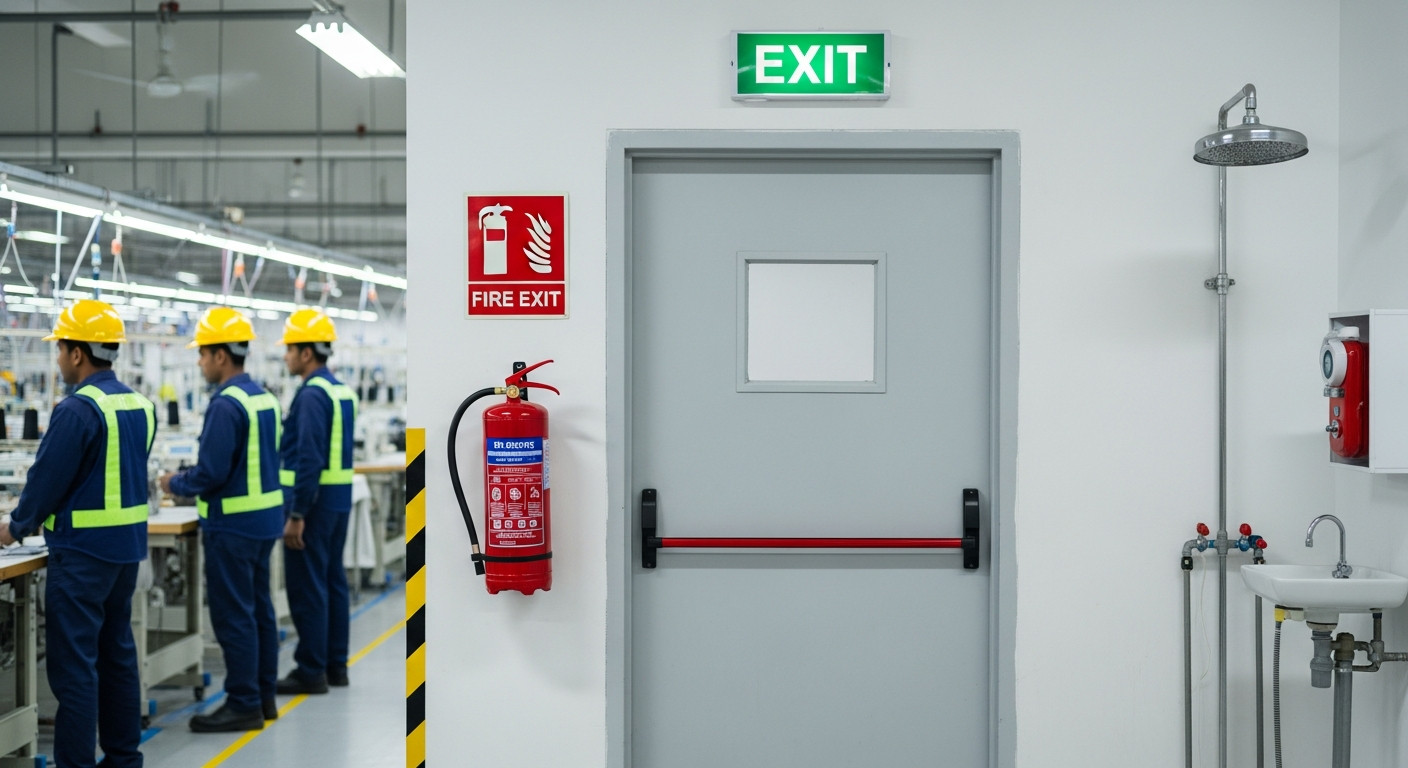
Modern factories are equipped with fire-rated doors, smoke detectors, automated alarms, suppression systems, and clear evacuation routes.
Stronger Safety Committees
Many factories now have dedicated safety officers and trained committees responsible for drills, equipment checks, and emergency coordination.
Worker Education
Factories conduct routine fire drills, evacuation training, and safety briefings—something that was rare a decade ago.
These changes did not happen overnight. They came from collective action, strict compliance requirements, and a global push for safer labor practices.
The Current Landscape: What Still Needs Work
Despite significant progress, challenges remain. Many small and subcontracting factories are still catching up with safety requirements due to financial constraints or lack of monitoring.
Persistent Gaps Include:
- Outdated or poorly maintained firefighting equipment
- Insufficient ventilation in older buildings
- Emergency exits blocked by boxes or machinery
- Inconsistent worker training
- Limited oversight in informal and unauthorized facilities
Globally, industries face similar challenges when balancing rapid production with safety. The key difference lies in governance, worker empowerment, and accountability.
Global Lessons Bangladesh Can Use
Countries like Vietnam, China, and Turkey offer strong fire safety models. These include advanced automation, independent inspections, and digital safety tracking. Adopting these practices can further strengthen garment factory fire safety in Bangladesh.
Lessons Worth Adapting:
- Digital monitoring of electrical loads and fire alarms.
- Transparent, easy-to-understand fire maps for every floor
- Strong whistleblower protection for workers
- Regular third-party safety audits
Research reference:
International Finance Corporation (IFC). “Factory Safety Programs and Innovations in Asia.”
https://www.ifc.org
Case Study 1: A Dhaka Factory’s Turnaround Through Modernization
A mid-sized factory in Ashulia struggled with outdated wiring, narrow exits, and inconsistent safety training. After an Accord inspection, the factory faced a choice: invest in modernization or risk losing long-term buyers.
The management responded wisely. They installed advanced smoke detectors, widened staircases, added new fire-rated doors, and conducted monthly evacuation drills. Within a year, the factory secured long-term contracts with European brands that valued its commitment to safety.
Workers reported feeling more confident and secure. Productivity even improved because employees were no longer anxious about safety hazards.
Case Study 2: A Chattogram Factory Saved by Proper Training
A small electrical fire broke out in a Chattogram garment factory during a machine malfunction. Thanks to regular drills, workers reacted calmly. Trained responders used extinguishers correctly and evacuated the building within minutes. There were no injuries.
The fire was contained before it spread, and the incident became a textbook example of how simple training can prevent disasters.
Research reference:
National Fire Protection Association (NFPA). “Workplace Fire Safety Training.”
https://www.nfpa.org
What Makes a Garment Factory Truly Fire-Safe?
Fire safety isn’t one thing; it’s a combination of many layers working together smoothly. Here are the elements that define a truly safe workplace:
1. Smart layouts and Fire-Resistant Structures
Well-marked exits, wide corridors, and fire-resistant materials in high-risk zones ensure safe evacuation.
2. Reliable Electrical Systems
Regular load testing, proper wiring, and automatic shut-off mechanisms reduce electrical fire risk.
3. Fully Functional Detection and Alarm Systems
Smoke detectors should be checked monthly, not yearly. Alarm systems should be audible, clear, and easily accessible.
4. Accessible Firefighting Tools
Extinguishers, hydrants, and hoses need to be visible and maintained—not buried behind materials.
5. Regular Drills and Worker Education
Training must be ongoing, practical, and engaging—not a one-time formality.
6. Accountability and reporting.
Safety committees must monitor hazards daily and maintain open communication with management.
The Human Side of Fire Safety: Culture Matters
A strong safety culture is built through trust. Workers need to believe that their safety is valued. Managers need to believe that investing in safety strengthens their business. Buyers need to reinforce compliance instead of focusing solely on delivery deadlines.
Cultural change is not about posters on the wall—it’s about consistent action. When workers are trained, respected, and empowered to report hazards, safety improves naturally.
Research reference:
Harvard Business Review. “Building a Culture of Safety.”
https://hbr.org
The Role of Technology in Future Fire Safety
Technology can dramatically reduce risk when integrated strategically. Even simple solutions can make a major difference.
Useful Innovations Include:
- Heat and smoke sensors connected to mobile apps
- Automated fire suppression systems
- Digital inspection logs for electrical equipment
- Factory-wide announcement systems for faster communication
- Safety dashboards for management and buyers
These tools create a rich safety environment where issues are detected early—before they become disasters.
How Buyers Influence Factory Safety
Global buyers now evaluate factories not only for product quality but also for ethical and safe operations. Strict compliance requirements, unannounced audits, and ongoing monitoring have accelerated improvements.
Factories that excel in safety:
- Attract better long-term partners
- Receive higher visibility in international supply chains
- Experience fewer disruptions from shutdowns or accidents
Safety is not just a cost—it’s a powerful competitive advantage.
A Clear Roadmap for Strengthening Fire Safety Further
To sustain long-term growth, Bangladesh’s RMG sector must continue advancing safety standards. A smart roadmap includes:
Strengthening Enforcement
Strict action against noncompliant factories, regardless of size.
Supporting Small Factories
Micro-factories need training and incentives for safety upgrades.
Raising Worker Awareness
Continuous training helps workers identify hazards quickly.
Investing in Safer Infrastructure
Modern machinery, fire-resistant staircases, and stronger storage guidelines reduce large-scale risks.
Enhancing Monitoring
Digital systems allow real-time oversight for owners, buyers, and regulators.
Conclusion: Building a Safer RMG Future Begins Now
The story of how garment factory fire safety in Bangladesh has evolved is one of resilience, learning, and transformation. Much progress has been made, but a safe industry is always a work in progress. With modern technology, global lessons, strong leadership, and empowered workers, Bangladesh can set a new global benchmark for factory safety.
A safer RMG industry is not just good for business—it protects lives, strengthens families, and uplifts the country’s image on the world stage.
If you want more research-backed guides on safety, compliance, and workplace excellence, feel free to explore more articles on our site.