
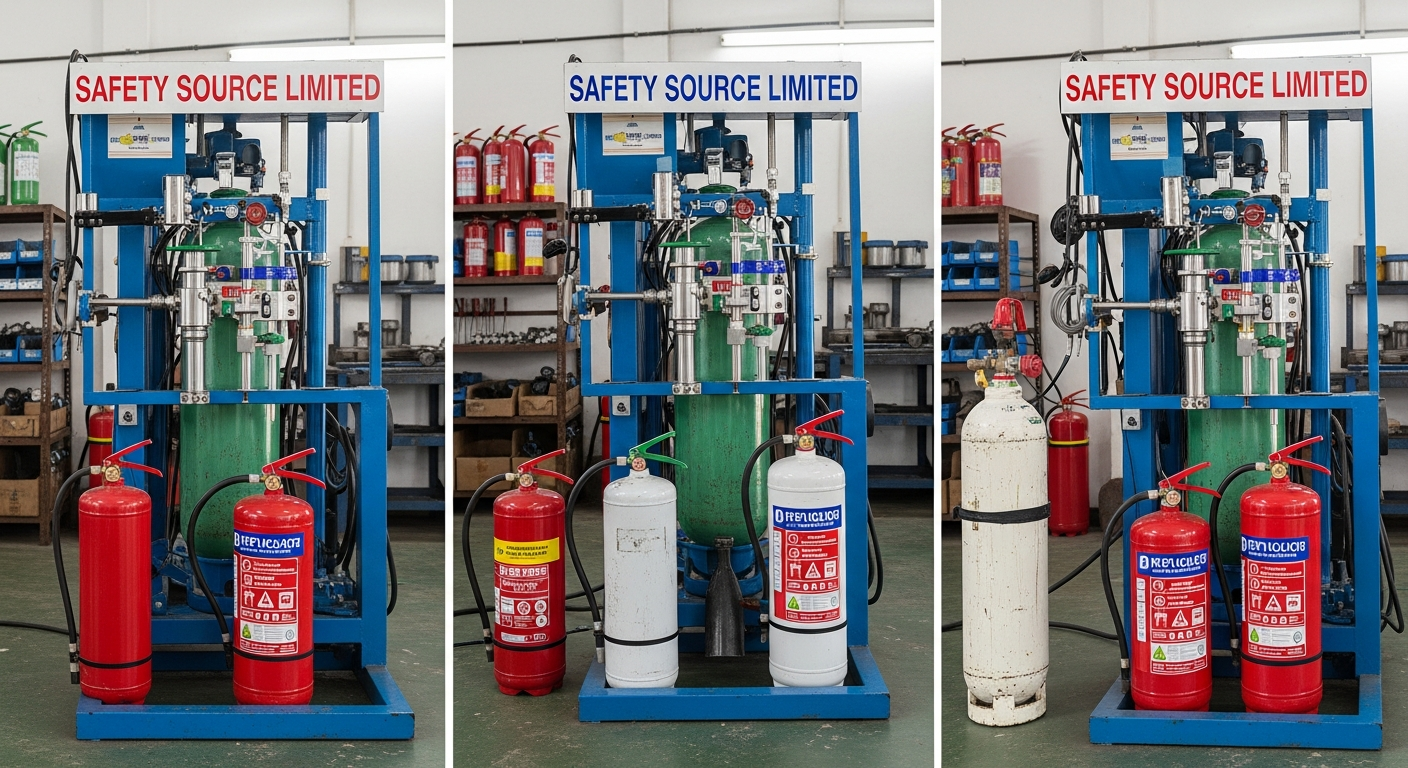
Introduction — When a tiny can saves lives
Imagine a scorching midday in a crowded building; a small spark leaps from a short circuit — and suddenly, smoke curls in a corner. A fire extinguisher, standing quietly on the wall, becomes the difference between a minor scare and a life‑threatening blaze. But that extinguisher must be ready to perform. That’s why fire extinguisher refilling — even in places where fires seem rare — remains a silent but crucial act of responsibility.
For buildings in Bangladesh — whether modest homes, bustling shops, or high‑rise offices — ensuring fire extinguisher readiness is not optional. In this article, we explore why refilling matters globally, when and how to do it properly, and practical tips to keep your fire‑safety gear reliable.
Why proper refilling matters: More than just a formality
A fire extinguisher might sit unused for years. Still, such inactivity doesn’t guarantee readiness. Over time pressure can drop, internal parts can corrode, or chemicals can settle — all reducing effectiveness in a crisis. (firesafetydealer.com)
Even worse: in many cases, authorities require proper maintenance or risk non-compliance, legal penalties, or failed inspections. (maintenancebyglobal.com)
Refilling offers multiple benefits:
- Restores full pressure and ensures the extinguishing agent is effective.
- Extends the usable life of the extinguisher — often more cost‑effective than frequent replacement. (firesafetydealer.com)
- Maintains compliance with safety standards and building regulations. (Global Compliance UK)
In short: refilling isn’t about ticking a box. It’s about making sure your life‑saving gear stays life‑saving.
How often should you refill — global norms & best practices
There is no universal “one‑size‑fits‑all” schedule because maintenance depends on extinguisher type, environment, and usage. But globally recognised standards give useful guidance.
Regular visual inspections — monthly or weekly
At minimum, a responsible person (e.g. building manager) should inspect extinguishers monthly — checking that the unit is visible, accessible, sealed, and shows correct pressure. (Global Compliance UK)
Professional servicing — annually or every couple of years
Many safety guidelines (like BS 5306-3:2017) recommend a full professional service at least once per year, done by certified technicians. This includes checking internal parts, pressure, hoses, gauges, seals, possibly refilling or recharging as needed. (maintenancebyglobal.com)
Extended maintenance cycles — every 5–10 years depending on type
- Water, foam or dry‑powder extinguishers often need a full discharge, inspection, refill and re-pressurisation every 5 years. (Global Compliance UK)
- CO₂ units and certain high‑pressure cylinders may require hydrostatic pressure testing or overhauls every 5–10 years, followed by refilling. (Global Compliance UK)
Immediate refill — after even partial use
If an extinguisher has discharged — even partially — it must be refilled before being returned to service. (Right Way International)
“Even an unused extinguisher can become ineffective due to leaks, corrosion, or expired chemicals.” (firesafetydealer.com)
Fire extinguisher refilling Bangladesh — What to know locally
Although many global standards apply, Bangladesh presents unique needs. High humidity, coastal air, and irregular maintenance habits can accelerate wear and pressure loss. That makes regular refilling even more important.
If you manage a building in Bangladesh (home, shop, office, factory), consider these steps:
- Mark every extinguisher with a visible service tag — date of last fill, type of chemical, next due date.
- Perform monthly visual inspections (gauge, pin/seal intact, no visible rust or damage).
- Use certified service providers for annual servicing and refill with approved agents only. Avoid “cheap fixes” with unknown chemicals.
- After any use — small or big — refill immediately. Never assume “it’s fine.”
- Keep documented service records for audits or safety checks.
This approach reduces risks and ensures you can rely on your fire‑safety gear when needed.
Real‑Life Examples
Case Study 1: Office block in Dhaka — pressure loss unnoticed
In a six‑floor office building in Dhaka, a fire extinguisher installed on the ground floor failed during a small electrical fire. The staff tried to operate it, but the powder didn’t discharge properly. Inspection later revealed that though the extinguisher looked intact, the pressure gauge was low — likely due to long-term neglect. The unit had never been professionally serviced or refilled in over five years. A timely refill and re-pressurisation would likely have avoided the failure.
This illustrates: look can be deceiving — only regular refilling and maintenance guarantee effectiveness.
Case Study 2: Small restaurant in Indonesia — regular refill saves kitchen
A small restaurant in Jakarta experienced a minor grease fire near its cooking area. The kitchen staff used a dry‑powder extinguisher purchased a few years ago. Because the restaurant management had a maintenance contract, the extinguisher had been recharged six months earlier. The discharge worked as expected, the fire was suppressed quickly, and sustainable damage was avoided. Their proactive maintenance plan proved to be a true lifesaver.
This shows how regular refill and check-ups — even for modest businesses — pay off tremendously.
How to choose quality refilling services — practical advice
- Check accreditation: Choose providers familiar with international standards (e.g. BS 5306, ISO, or equivalents) and who use approved refill agents.
- Ensure full service, not just refill: A good service includes checking pressure, valves, corrosion, seals, hoses, labels — not just topping up powder or gas.
- Ask for marked tags and records: After servicing, insist on a clear service tag with date, agent type, expiry/next service date, and technician info.
- Schedule periodic full maintenance: Besides yearly servicing, plan for full internal inspection / hydrostatic testing every 5–10 years depending on type.
- Don’t ignore extinguishers just because they’re “never used”: Environmental factors can degrade performance — so regular care matters even if it sits idle.
Global Context: Fire Safety Doesn’t Wait for a Fire
Around the world — in offices across London, factories in Singapore, schools in Nairobi — fire extinguishers remain a backbone of first-response fire safety. Standards like NFPA 10, BS 5306, and various national regulations demand routine servicing, refilling and inspection. (firematic.com)
The principle is universal: the reliability of a fire extinguisher depends not on its purchase date, but on how well it’s maintained. With a simple monthly check, yearly servicing and timely refilling after use, a building — anywhere in the world — stays ready for the unexpected.
When fire extinguisher refilling might not be enough — and when to replace
Refilling is essential — but it’s not magic. In some cases, replacement might be the safer option:
- If the cylinder shows severe corrosion, dents, or damage.
- If the extinguisher is too old (many reach 10–12 years lifespan).
- If internal parts (valves, hoses) are worn or malfunctioning even after servicing.
- If the extinguisher type is obsolete or non‑refillable (some older, single‑use units are excluded from servicing). (firematic.com)
In such cases, proper disposal and replacement with a certified new unit is a better investment than repeated fixes.
Conclusion: Actionable Takeaways & Next Steps
Fire extinguisher refilling — done right — is not a burdensome chore. It is a vital commitment to safety. Remember:
- Inspect monthly, service annually, refill after every use.
- Use certified service providers and insist on approved refill agents.
- Log each service, keep tags visible, and plan for periodic pressure‑tests or overhauls.
- Replace, rather than patch up, when an extinguisher shows serious wear or is beyond its lifespan.
Whether you manage a home, a shop, or a large building — investing a little time and care now can save lives, property, and huge trouble later.
to read more on fire safety click here