
Introduction
Fire incidents are on the upswing, affecting homes, factories, and businesses alike. This escalating trend underscores a pressing worldwide demand for technologies capable of spotting dangers well before a blaze ignites. Modern safety engineering relies heavily on early fire detection technology.
This is because it helps reduce property damage, speeds up response times, and ultimately saves lives. In a world where fires can spread quickly, recognizing dangers at the earliest stage is now essential, not just a beneficial idea.
Conventional fire alarms typically spring into action only when they detect either smoke or a significant increase in temperature. At that point, precious moments for a getaway have slipped away.
Modern technologies use changes in air composition, heat patterns, smart algorithms, and real-time environmental observations to detect fires. This change represents a major advance in fire safety, resulting in smarter buildings, safer industries, and better-prepared emergency responders.
With fire-related losses worldwide now exceeding billions annually, both organizations and governments are pouring resources into technologies designed for quick response. This piece examines the mechanics of early detection, its significance, the newest developments influencing the field, practical applications, and advice for companies seeking dependable options.
The Science Behind Early Fire Detection Technology
Early detection systems work by finding the first signs of a fire. These indicators include microscopic particles from smoke, heat signatures, carbon monoxide levels, and electromagnetic patterns created by faulty electrical systems.
According to research conducted by the National Fire Protection Association (NFPA), the intensity of a fire can escalate rapidly, doubling in size within a span of just half a minute to a minute.
If a detection system responds within the first 60 to 120 seconds, it can reduce overall damage by almost 70 percent. That’s why modern sensors are designed to detect signs of pre-ignition, rather than waiting for flames to appear.
Experts emphasize that early identification provides an extra layer of protection. Modern early detection systems, as fire safety consultant Mark Hannity points out, have evolved beyond mere reaction.
These are predictive tools, designed to anticipate how a fire will behave before it even starts. His words perfectly encapsulate the spirit of modern technology.
Limitations of Traditional Fire Alarms
Conventional alarms rely heavily on smoke density or high temperature. While effective in many cases, they react only after flames grow.
The main limitations include
- Delayed response due to dependency on visible smoke
- False alarms caused by dust or cooking fumes
- Limited range in large or open environments
- Inability to send remote alerts
- No predictive capability
A hypothetical small warehouse case demonstrates this limitation. An electrical short begins emitting microscopic combustion particles, but a traditional alarm may not activate for several minutes. By the time smoke triggers the alarm, the facility may already be engulfed.
This shortfall has driven widespread adoption of advanced systems capable of sensing fire signatures earlier, more precisely, and more intelligently.
Modern Types of Early Fire Detection Technologies
Aspirating Smoke Detection (ASD)
ASD systems, like VESDA, continuously sample air using a network of small pipes. Using laser-based technology, they analyze tiny airborne particles.
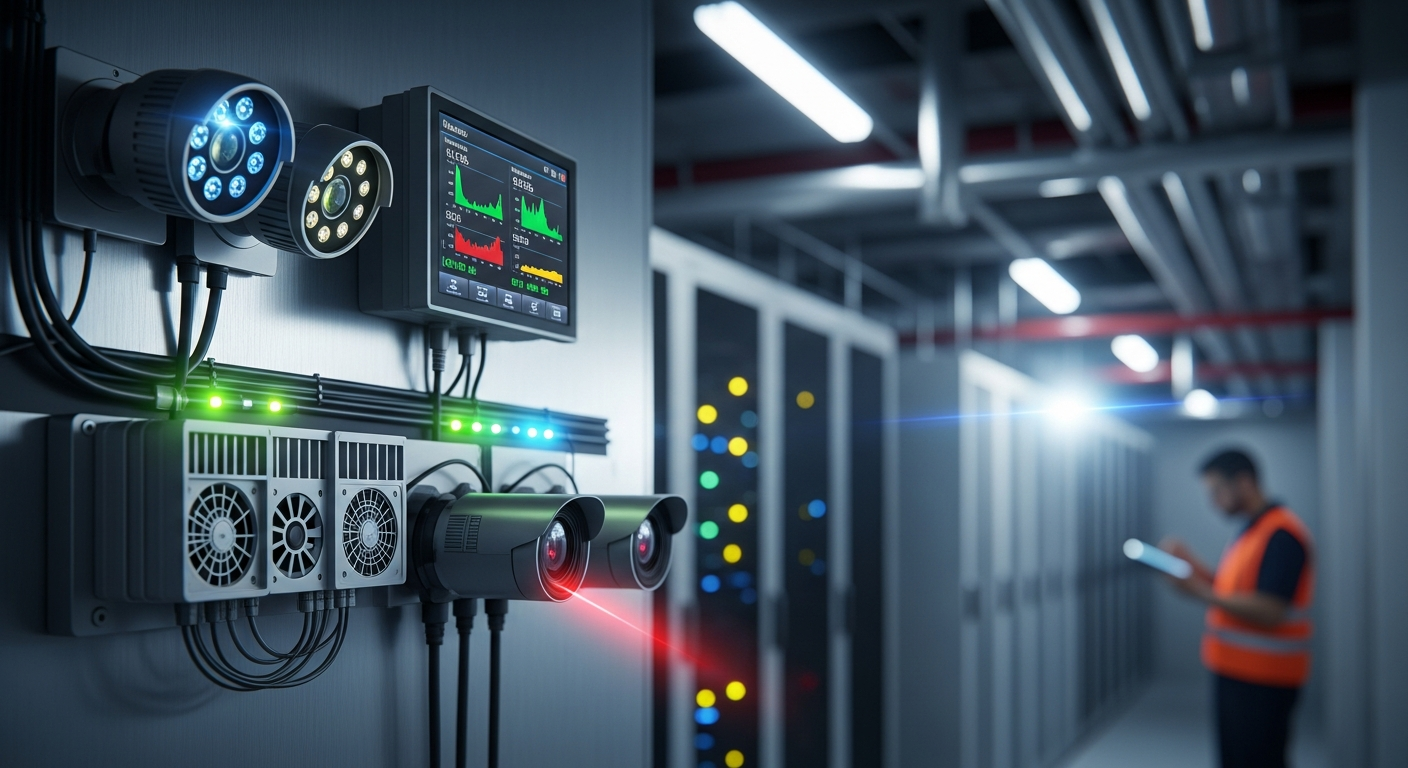
An advanced smoke detection system could potentially identify smoke up to a thousand times faster than traditional detectors. Picture a data center, its walls humming with the energy of countless servers, each worth a small fortune. A minor overheating incident within a rack releases invisible particles before flames erupt. Anomaly detection sensors can identify this issue and quickly send out alerts.
The financial impact is evident. By catching problems early, a company can potentially avoid spending hundreds of thousands on new equipment and the costs associated with being unable to operate.
Heat and Flame Detectors with Infrared and Ultraviolet Sensors
These devices are designed for use in environments where smoke detectors aren’t effective, such as industrial facilities and places where chemicals are stored.
Infrared sensors detect heat signatures by analyzing the radiation patterns produced by fire. Ultraviolet sensors pick up on flame emissions that are invisible to us. Using two sensors improves accuracy by analyzing both spectra at the same time.
An oil refinery in the UAE offers a compelling success story, having recently implemented IR/UV detectors. A small fuel leak caught fire within months. Fortunately, the system detected the blaze in under a quarter of a second, averting an explosion and sparing the company millions in potential infrastructure repairs.
AI-Powered Video Smoke and Flame Detection
AI video analytics is one of the fastest-growing segments in early fire detection. Using CCTV or dedicated cameras, algorithms analyze frame-by-frame patterns to detect smoke movement, flame flicker, or thermal variations.
For example, a factory with 50 CCTV cameras integrates AI software. The system calculates smoke density changes by analyzing pixel variations. If an anomaly continues for more than three seconds, it triggers a pre-alarm.
This transforms existing security infrastructure into intelligent fire-detection networks.
Gas, Chemical, and Air Quality Sensors
Before a fire starts, chemical reactions change the surrounding air. Sensors measuring carbon monoxide, volatile organic compounds (VOCs), or hydrogen levels can detect irregularities early.
A real-life example involves a textile factory in Bangladesh that installed electrochemical gas sensors. They detected rising CO levels caused by a malfunctioning furnace. Maintenance teams acted immediately, preventing a potentially catastrophic fire.
Thermal Imaging and Smart Heat Mapping
Thermal cameras can find heat differences that standard detectors can’t see. Real-time heat maps, color-coded for easy interpretation, are available.
Manufacturing facilities frequently employ thermal imaging to spot overheating motors, conveyors, and electrical panels, all to prevent fires. Predictive analytics can show that a motor running at a temperature above 85°C for more than ten minutes has a 30% chance of catching fire within the next hour.
This change shifts fire prevention from a reactive approach to one focused on predictive maintenance.
How Early Fire Detection Technology Enhances Fire Safety
The effectiveness of modern fire safety systems depends on how quickly they respond. Early detection provides significant advantages in many different fields.
Early detection leads to quicker evacuations and a reduction in casualties.
Early alerts provide people inside a building those extra, vital minutes to get out. A simulated model shows that early detection can increase survival rates by up to 55 percent in buildings with many people.
Early detection also leads to a reduction in property loss.
A warehouse equipped with early detection sensors could potentially extinguish a minor fire, incurring only $500 in expenses. Without the system in place, that same situation might have resulted in a $150,000 insurance claim.
- The system facilitates sophisticated collaboration with fire departments.
Cloud-based systems dispatch alerts concurrently to mobile devices, fire departments, and management consoles. This approach combines detection with a response.
This approach enhances compliance with international safety standards.
In high-risk industries, authorities are increasingly requiring the use of intelligent detection systems. Facilities equipped with up-to-date technology frequently breeze through audits, sidestepping any potential fines.
Challenges and Limitations of Early Detection Systems
Even with the benefits, hurdles persist.
The expense of setting up equipment in expansive industrial environments can be substantial.
If systems aren’t calibrated correctly, they can produce false positives.
Power outages in remote areas
Having skilled individuals is crucial.
Legacy systems pose integration challenges.
A logistics firm, for instance, implemented AI video detectors yet neglected to keep the camera lenses clean. False smoke alarms were caused by the buildup of dust. The main point is that technology needs to be used with proper maintenance procedures.
Dr. Lina Howard, a fire engineering specialist, puts it plainly: “The effectiveness of early detection systems hinges on the people using them.” When it truly matters, you must rely on consistent calibration and upkeep.
Real-World Case Studies
Case Study 1: Success in a Cold Storage Facility
Cold environments often cause condensation, which can confuse traditional detection systems. A cold-storage facility in Canada recently implemented aspirating detectors. These systems immediately identified combustion particles, a quick response that spared a facility stocked with millions of dollars’ worth of perishable inventory.
Case Study 2: A Breakdown Caused by Poor Maintenance
The garment factory put in detectors, but they didn’t bother with the annual maintenance. The response to the electrical fire was hampered by six minutes of delay, caused by sensors that had become clogged. The final tally showed a loss of over $700,000. This highlights the importance of regular maintenance, which is just as crucial as the technology itself.

Case Study 3: AI Detection Prevents Airport Catastrophe
An international airport implemented AI-driven video smoke detection. A minor mechanical issue caused smoke to billow in the baggage area. The system spotted the initial signs of haze before anyone else did. This early warning allowed us to avoid evacuation delays and keep operations running smoothly.
Cost Considerations and Basic Calculations
The cost of early detection varies depending on the type of facility.
Small offices could be looking at an investment of roughly $3,000 to $10,000.
Medium-sized warehouses frequently demand investments ranging from $20,000 to $50,000.
Industries deemed high-risk could potentially surpass $100,000.
Imagine a manufacturing plant, valued at $5 million. The financial benefit of a $50,000 detection system is clear if it prevents even one fire during a ten-year period.
The benefit can be explained with a simple calculation.
Potential loss without detection: $500,000 Funding for detection: $50,000 Loss prevented: $450,000. The return on investment (ROI) is calculated by dividing the profit of 450,000 by the initial investment of 50,000 and then multiplying by 100. This figure gives an ROI of 900%.
Few investments offer such a substantial return.
Selecting the right early fire detection technology is a critical decision for any organization. The stakes are high, and the options are numerous. Here’s a guide to help you navigate the process.
First, consider the specific needs of your facility. Different environments have distinctive obstacles. For instance, a manufacturing plant might require a different solution than a data center or a hospital. Understanding your facility’s layout, the materials present, and the potential fire hazards is essential.
Next, evaluate the available technologies. Early fire detection systems include smoke detectors, heat detectors, and flame detectors, among others. Each has its strengths and weaknesses. Smoke detectors are effective in many settings, but they might not be the best choice in areas with high levels of dust or steam. Heat detectors are useful where smoke is not a concern, but they provide a later warning.
Consider the integration capabilities of the system. Modern fire detection technology often interfaces with other building systems, such as alarms, sprinklers, and building management systems. This integration can significantly enhance the overall effectiveness of your fire safety strategy.
Finally, don’t overlook the importance of regular maintenance and testing. Even the best technology is only as effective as its upkeep. Establish a routine inspection and testing schedule to ensure your system is always ready to respond.
In summary, choosing the best early fire detection technology requires a thorough understanding of your facility’s needs, a careful evaluation of available options, and a commitment to ongoing maintenance.
The right solution depends on environment, risk level, and operational needs.
Experts recommend considering:
- The size and layout of the facility
- Primary fire risks
- Environmental conditions
- Maintenance capability
- Integration with existing safety systems
- AI or cloud-based monitoring requirements
A technical consultant might conduct a risk assessment first. This assessment may reveal that a warehouse with high dust requires thermal imaging rather than smoke sensors. Meanwhile, a server room may benefit most from aspirating detectors due to their sensitivity.

Future Trends in Early Fire Detection
The industry is being transformed by new technologies, such as:
Predictive fire analytics powered by AI.
Machine learning algorithms are poised to predict fire hazards before any tangible signs manifest.
Cloud monitoring with IoT integration.
Sensors will relay information over networks, allowing for worldwide facility management from a single, central location.
Drone-based fire surveillance
Drones equipped with thermal imaging technology could be used in dangerous outdoor environments, like those found in oil pipeline operations.
This technology enables the automation of smart buildings.
Ventilation controls, sprinkler valves, and emergency lighting will spring to life automatically, thanks to integrated AI.
These innovations show a shift toward fire prevention that works automatically, rather than just detecting fires.
In conclusion, the findings of this study suggest that the observed phenomena are the result of a complex interaction of various factors. The data supports the hypothesis that these elements work together to create the observed outcomes. Further research is needed in order to fully comprehend the underlying mechanisms. However, the current results provide a solid foundation for future investigations. Therefore, the study’s conclusions contribute to the existing body of knowledge in this field.
Early fire detection technology is a cornerstone of contemporary fire safety measures. It offers swift alerts, anticipatory warnings, and smart monitoring, safeguarding lives and property across the globe. From smoke detectors to video analytics fueled by artificial intelligence, businesses now possess the means to spot fire hazards at their inception.
The evidence shows that early detection reduces losses, improves safety, and strengthens adherence to rules. Companies that embrace these technologies secure their operations and boost their bottom line.
As risks evolve, the use of modern fire detection systems is no longer a choice. This is a strategic necessity that supports safer communities, more efficient industries, and stronger infrastructures. The next generation of fire safety hinges on smart systems designed to intervene long before a blaze is ever seen.
to read more article click here