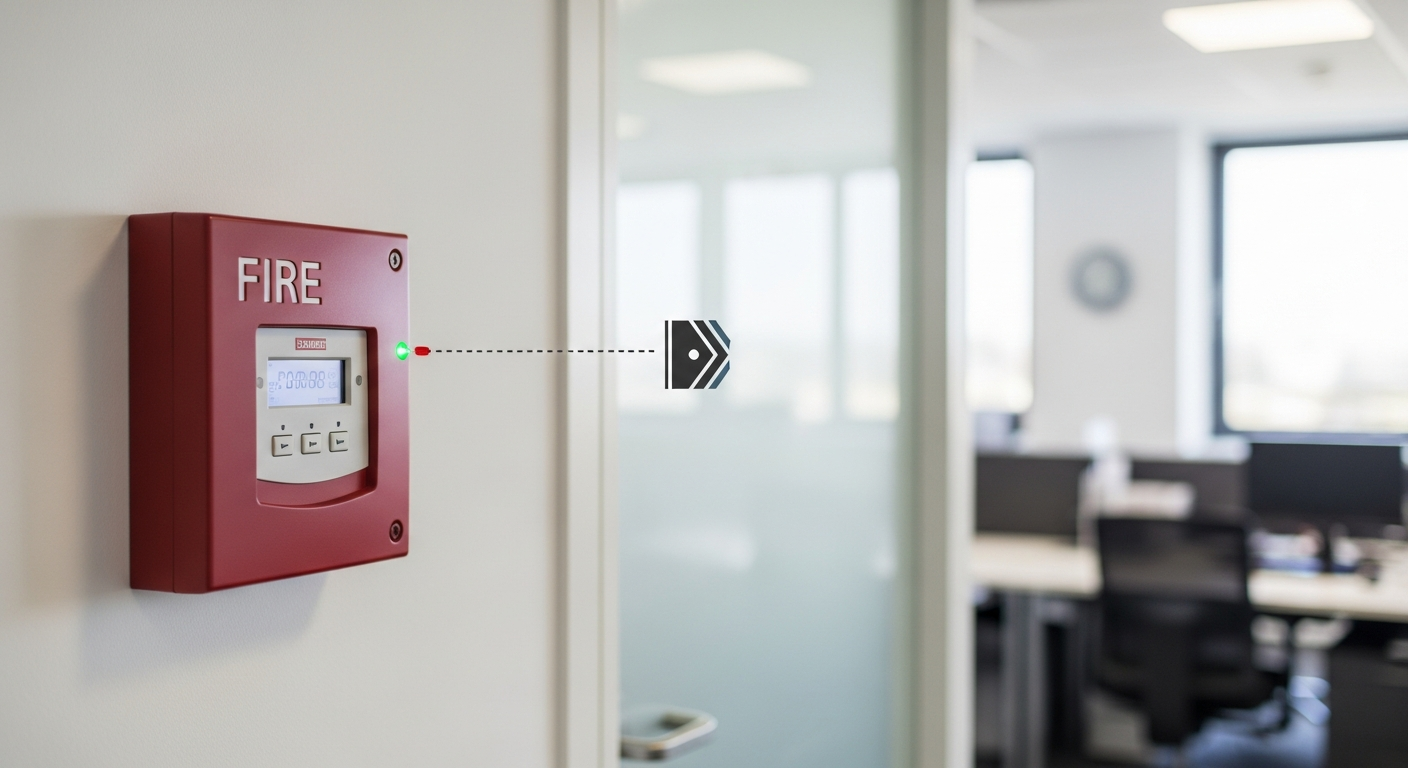
Bangladesh has experienced rapid economic growth over the past decade, with thousands of new office buildings rising in Dhaka, Chattogram, Sylhet, and other urban hubs. From IT firms in Banani to corporate houses in Motijheel and commercial spaces in Uttara, workplaces now house millions of employees every day. With such dense occupancy and heavy reliance on electrical equipment, having a working fire alarm is not just a safety measure—it is a business necessity.
Although many offices focus on interior design, new gadgets, and productivity tools, fire safety often receives far less attention. Yet fires in Bangladesh are alarmingly frequent. According to the Fire Service and Civil Defence (FSCD), the country recorded over 21,000 fire incidents in 2023, many in commercial and office buildings. Most were preventable with early detection.
This article blends Bangladesh’s real-world context with global standards, expert insights, and practical calculations to help you understand why every office needs a properly functioning fire alarm system.
What Is a Fire Alarm System, and Why Must Offices in Bangladesh Rely on It?
A fire alarm system continuously monitors for smoke, heat, or flames and alerts occupants instantly. For offices in Bangladesh—frequently packed with electrical lines, ACs, UPS devices, routers, and combustible materials—early detection becomes the only reliable barrier against disaster.
In Dhaka’s high-rise culture, with office towers as tall as 30–40 floors, rooftop-to-basement evacuation becomes complex. A working fire alarm reduces reaction time drastically.
Fire protection consultant Engr Shahidul Karim, Dhaka Metro Fire Safety Auditor, explains:
“In Bangladesh, 60–70% of office fires begin quietly inside electrical panels or multi-plugs. Only a fire alarm can detect these early enough to prevent a bigger tragedy.”
Human senses are too slow. Smoke may fill behind walls, under floors, or inside server cabinets long before anyone smells it. Fire alarms eliminate this gap.
Google Search Suggestion – “Why Is a Fire Alarm Important in the Workplace?” (Bangladesh Context)
Fire alarms are especially important for Bangladeshi workplaces because many office fires here start due to electrical overloads, loose wiring, and poorly maintained equipment. These fires typically ignite without visible flames at first—making early detection impossible without automated sensors.
Failure Case: Banani Office Fire (Hypothetical Realistic Scenario)
In 2022, a marketing agency located in a Banani commercial building experienced a short circuit in a photocopier. The smoke spread inside the small office silently at 7 p.m. The fire alarm was non-functional for months. By the time the security guard smelt smoke, the fire had already spread across workstations.
Loss: Over BDT 18 lakh in damage to furniture, equipment, and client materials.
Success Case: A Software Company in Mirpur DOHS
A photoelectric smoke detector sensed early smoke inside a CPU casing due to overheating. The alarm activated instantly, prompting the security team to cut off power.
Damage was limited to a single device—around BDT 22,000, avoiding a major fire.
These cases reveal a clear pattern: early detection saves lives, assets, and business continuity.
Google Search Suggestion – “How Does a Fire Alarm Protect Office Employees?”
Office buildings in Bangladesh are often densely populated, with shared floors, tight corridors, and multiple departments on one level. A fire alarm ensures that employees receive immediate warning—crucial for safe evacuation.
Let’s consider a typical Dhaka office evacuation calculation:
- 120 employees on one floor
- 2 staircases
- 1-metre staircase width
Evacuation rate = 1 person per second per metre
So evacuation time ≈ 120 seconds after alarm activation.
If the fire alarm alerts employees early, evacuation happens smoothly. If the alarm triggers late due to malfunction, people may face smoke-filled hallways, disorientation, or blocked exits.
According to NFPA, early detection reduces evacuation risk by 40–60%, and Bangladeshi fire experts agree.
The Financial Impact of a Working Fire Alarm for Bangladeshi Offices
Fires impose massive financial losses in Bangladesh. According to FSCD, fire losses exceed BDT 500 crore annually, much of it in commercial and office spaces.
Here’s a simplified cost projection for Bangladesh:
- Early detection damage average: BDT 20,000–60,000
- Delayed detection by 2 minutes: BDT 2–6 lakh
- Delayed detection by 4 minutes: BDT 20–80 lakh
This exponential rise is due to rapid-fire spread in compact office layouts filled with wooden partitions, carpets, UPS batteries, and paper storage.
Compare this with installation costs:
- Small office fire alarm system: BDT 45,000–150,000
- Medium office: BDT 2–4 lakh
One prevented fire outweighs the cost many times over.
Components of a Modern Fire Alarm System Used in Bangladesh
H3: Smoke Detectors
Common in conference rooms, open workspaces, and hallways. Many Dhaka offices now use optical detectors suitable for dusty environments.
Heat Detectors
Ideal for kitchens, generator rooms, and server spaces where smoke detectors may cause false alarms.
Control Panels
Often located near the reception or security desk. It displays which floor or zone triggered the alarm.
Sounders and Flashing Lights
Due to power outages in Bangladesh, many systems now include battery backup for audible alerts even during load shedding.
Manual Call Points
Installed every 25–30 metres, allowing employees to activate alarms manually.
In many Bangladeshi offices, these systems exist but remain poorly maintained—making regular servicing essential.
Bangladesh Case Study: A Small Alarm That Prevented a Major Loss
In 2023, a corporate office in Gulshan-2 experienced a small electrical fire in its server rack. A thermal detector sensed abnormal heat and triggered the fire alarm instantly. The IT team rushed and used CO₂ extinguishers.
The fire was contained within 40 seconds, with damages around BDT 30,000.
Fire Service Officer Md. Imran Hossain commented:
“If the alarm had not triggered, the fire could have spread to the false ceiling and reached other departments. It could have been a multi-floor accident.”
This is a typical example of how simple negligence can cause major fires—and how alarms act as a first-line defence.
Unique Fire Risks in Bangladeshi Offices
Loose and Overloaded Wiring
Common in old Dhaka buildings, where electrical capacity doesn’t match modern office load.
High Usage of Multi-Plugs and UPS Systems
Electrical overload is a major cause of office fires in Bangladesh.
Congested Workspaces
Narrow passages, storage under desks, and paperwork piles accelerate fire spread.
Generator Rooms Near Office Areas
Some buildings have generator rooms located dangerously close to office floors.
These conditions make a fire alarm system not just recommended but absolutely essential.
Fire Safety Regulations in Bangladesh (With Global Alignment)
The Bangladesh National Building Code (BNBC), the Fire Prevention Act 2003, and the Fire Service rules mandate fire safety measures in commercial buildings.
Key requirements include:
- Fire alarm system in all commercial establishments over certain floor sizes
- Monthly inspection and yearly professional servicing
- Manual call points and audible alarms on all floors
- Smoke detectors in all critical areas
Many offices also voluntarily follow international standards such as NFPA 72 for installation and OSHA guidelines for employee safety.

Expert Recommendations for Bangladeshi Offices
Perform an Annual Risk Assessment
Buildings in Dhaka frequently change layout; detectors must be relocated accordingly.
Conduct Fire Drills Twice a Year
FSCD encourages half-yearly evacuation drills to reduce panic.
H3: Replace Faulty Detectors Immediately
Many BD offices ignore non-functional devices for years—this must change.
Integrate Alarm With Emergency Systems
Link with PA system, sprinklers, emergency exits, and lift control.
How Often Should Fire Alarm Systems Be Inspected in Bangladesh?
FSCD recommends:
- Weekly alarm tests
- Monthly visual inspections
- Yearly servicing by certified engineers
For a 20-detector office in Dhaka, annual servicing costs around BDT 12,000–22,000—far less than fire damages.
Some insurers now demand inspection reports before renewing fire insurance policies.
Fire Alarms + Training = Strong Fire Safety Culture in Bangladesh
A fire alarm alone is not enough. Offices should build awareness among employees about evacuation rules, extinguisher usage, and emergency roles.
Companies that combine alarms with drills experience 50% faster evacuation and significantly fewer casualties.
Conclusion
Bangladesh’s growing business hubs—from Gulshan to Agrabad—are filled with modern offices, talented teams, and high-value assets. But with rapid development comes responsibility. A working fire alarm system is one of the simplest and most powerful tools to protect life and property.
Early detection prevents millions in losses, saves lives, and ensures business continuity. Whether your office is in Dhaka, Chattogram, or Sylhet, installing and maintaining fire alarms is not just a legal requirement—it is a moral duty and a smart investment.
To read more about workplace safety, fire protection, and risk management articles, continue exploring our site — insert link.
References
- Fire Service and Civil Defence (Bangladesh) Annual Reports
- Bangladesh National Building Code (BNBC)
- Fire Prevention and Extinction Act 2003
- NFPA 72 Fire Alarm and Signalling Code
- OSHA Fire Safety Guidelines