
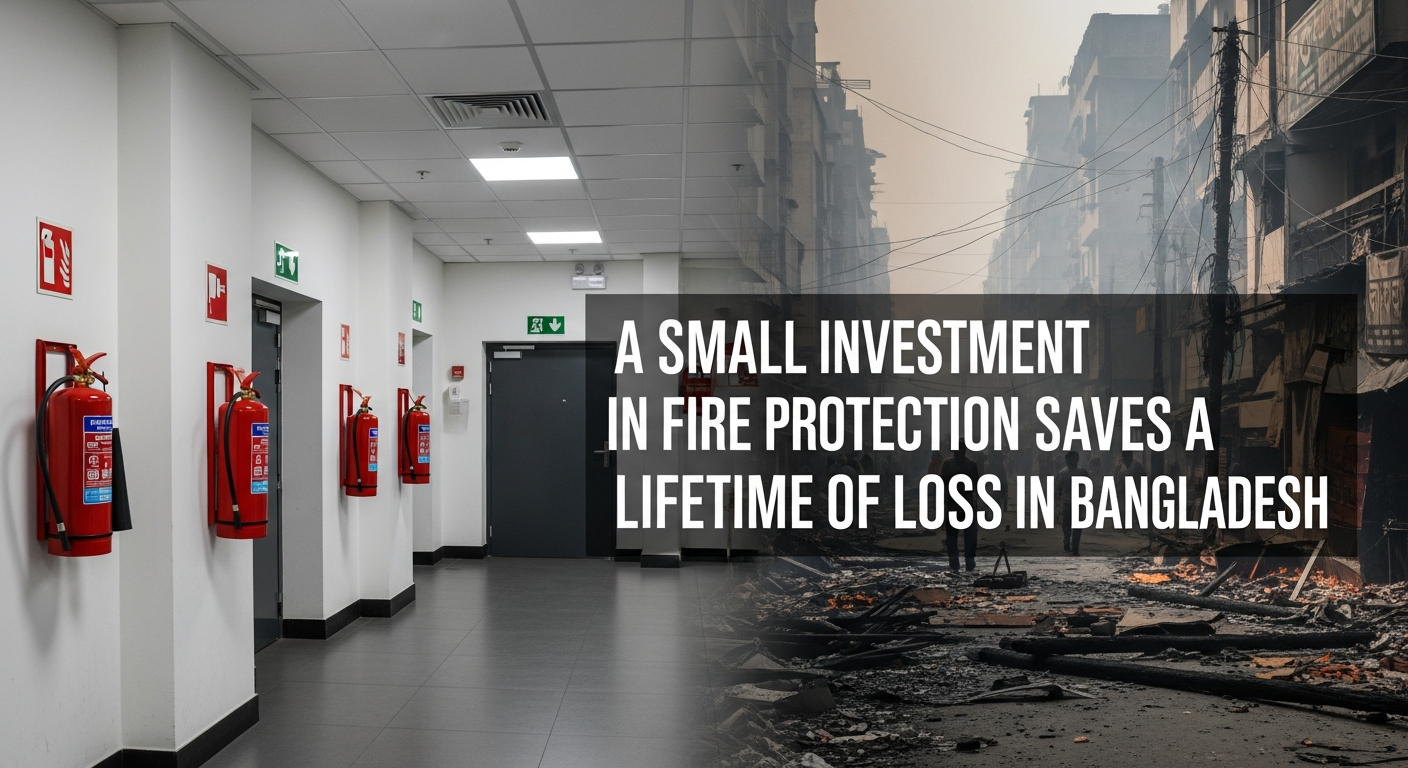
Fire incidents are a persistent threat across Bangladesh, from crowded urban apartments to small rural businesses. Every year, thousands of homes, shops, and factories suffer devastating losses due to fire accidents. Understanding that a small investment in fire protection saves a lifetime of loss is crucial for property owners, business managers, and families alike.
In Dhaka, Chattogram, and other major cities, congested living conditions, outdated electrical wiring, and lack of fire awareness make fire incidents more frequent and destructive. According to the Fire Service and Civil Defence (FSCD) Bangladesh, more than 10,000 fire incidents are reported annually, causing billions of Bangladeshi Taka in damage and dozens of preventable fatalities. Simple investments such as smoke detectors, portable extinguishers, and fire training can prevent catastrophic outcomes and save lives.
This article explores practical fire safety strategies for Bangladesh, including case studies, cost examples, expert guidance, and actionable tips for homeowners, business owners, and factory managers. By prioritizing fire protection today, you can significantly reduce both financial loss and human risk.
The Real Cost of Fire in Bangladesh
Fires in Bangladesh often result in devastating financial and human consequences. Consider a small Dhaka-based garment workshop worth approximately BDT 25 lakh. A minor electrical fire could destroy inventory, machinery, and infrastructure, leading to losses between BDT 5–10 lakh. In contrast, spending just BDT 50,000–1,00,000 on fire protection equipment and training could reduce the potential loss by more than 70%.
A local example illustrates this vividly. In 2022, a kitchen fire in a Dhaka restaurant spread rapidly. Fortunately, a nearby fire extinguisher and alert staff prevented major damage, limiting losses to around BDT 25,000. Without the equipment, damages could have easily exceeded BDT 10 lakh. This case highlights how small investments in fire protection save a lifetime of loss in Bangladesh’s high-risk urban settings.
Fire Risk Assessment: A Bangladesh Perspective
Fire risk assessment is the foundation of effective prevention. In Bangladesh, common causes of fires include faulty wiring, gas cylinder leaks, short circuits, and negligence during cooking. Residential buildings, markets, and factories storing flammable materials require special attention.
Conducting a risk assessment in Bangladesh involves identifying high-risk areas, estimating potential financial and human losses, and planning preventive measures. For instance, a Dhaka-based garment factory may face a fire risk that could destroy BDT 50 lakh worth of machinery. Investing BDT 1–2 lakh in fire extinguishers, alarms, and staff training is a cost-effective way to mitigate this risk. FSCD Bangladesh recommends annual or semi-annual fire audits for commercial facilities.
Essential Fire Protection Investments in Bangladesh
Fire Extinguishers
Fire extinguishers are the first line of defense. In Bangladesh, Class A, B, and C extinguishers are widely available for as low as BDT 2,500–10,000 depending on capacity. Choosing the right type based on potential hazards—such as electrical fires or chemical storage—is critical.
Staff training is vital. Without proper usage knowledge, extinguishers may remain ineffective during an emergency. Many small businesses in Dhaka report successful containment of minor fires due to trained personnel using extinguishers correctly.
Smoke Alarms and Detection Systems
Smoke alarms significantly reduce fatalities and losses in fire incidents. While urban apartments increasingly adopt smoke alarms, many older buildings in Bangladesh still lack them. A small investment of BDT 1,000–2,000 per unit could prevent substantial property damage and save lives.
Interconnected alarms are particularly useful in multi-story apartments or office buildings. They alert all occupants simultaneously, allowing timely evacuation—a factor that can make the difference between life and death.
Fire-Resistant Materials
Investing in fire-resistant building materials protects property in high-risk areas. In Bangladesh, fire-resistant roofing, treated wood, and fire-rated plasterboard can reduce damage significantly. Although slightly costlier upfront, these materials help avoid devastating losses in densely populated urban areas prone to rapid fire spread.
For example, a BDT 5 lakh investment in fire-resistant walls and ceilings for a small office can prevent losses exceeding BDT 50 lakh during a major fire.
Fire Safety Training and Evacuation Planning
Human preparedness is critical. In Bangladesh, businesses, schools, and residential societies are increasingly conducting fire drills and training programs. Staff and residents need to know evacuation routes, safe handling of extinguishers, and emergency communication.
Data from FSCD Bangladesh shows that communities conducting regular drills report fewer injuries and faster containment of fires. Daily measures—such as keeping exit routes clear and avoiding electrical overloads—enhance safety significantly.
Calculating the ROI of Fire Protection in Bangladesh
Cost-benefit analysis demonstrates the financial wisdom of fire protection:
Example:
- Potential fire loss: BDT 10 lakh
- Investment in protection (extinguishers, alarms, training): BDT 1 lakh
- Loss reduction potential: 80%
Expected loss after protection: BDT 10 lakh × 20% = BDT 2 lakh
Net savings: BDT 10 lakh – BDT 2 lakh – BDT 1 lakh = BDT 7 lakh
This shows that even small expenditures provide substantial savings and protect human life.
Lessons from Fire Incidents in Bangladesh
Success Story: Dhaka Apartment Fire, 2021
In 2021, a small electrical fire occurred in a Dhaka apartment building. Quick response using nearby extinguishers and alarms prevented the fire from spreading. No casualties were reported, and property damage was minimal—around BDT 30,000. Early intervention saved thousands of lives and financial losses.
Failure Example: Chattogram Warehouse Fire, 2019
A warehouse storing flammable chemicals in Chattogram caught fire due to electrical short circuits. Lack of alarms and extinguishers allowed the fire to spread rapidly, destroying goods worth over BDT 1 crore. Several workers were injured. The incident illustrates how a small investment could have prevented massive losses.
Expert Insights in Bangladesh Context
FSCD Bangladesh recommends:
“Installing fire alarms, extinguishers, and maintaining clear escape routes are non-negotiable safety measures. Businesses and households must act proactively.”
Local insurance assessor Shahidul Islam adds:
“Prevention is more cost-effective than claiming insurance. Minor investments in fire protection protect both property and human life.”
Practical Fire Safety Measures for Bangladesh
Daily precautions in Bangladesh can dramatically reduce fire risk:
- Avoid overloading electrical circuits, especially in older homes.
- Store cooking gas cylinders safely and check for leaks.
- Conduct regular inspections of electrical wiring in apartments and offices.
- Ensure clear exit routes in crowded buildings and markets.
- Practice fire drills regularly in factories, schools, and residential societies.
These simple steps, combined with equipment investments, create a culture of safety across Bangladesh.
Conclusion: Prioritize Fire Protection in Bangladesh
Understanding that a small investment in fire protection saves a lifetime of loss is crucial for homes, offices, and factories in Bangladesh. Fire extinguishers, smoke alarms, fire-resistant construction, and training form a layered defense against catastrophic incidents.
Invest in assessment, protection, and preparedness today. Even modest measures can prevent devastating financial and human loss tomorrow. Fire safety is not optional—it is a necessity in Bangladesh’s urban and industrial environment, ensuring security, peace of mind, and the preservation of life.
References:
- Fire Service & Civil Defence Bangladesh Annual Report, 2022.
- NFPA Global Fire Safety Statistics, 2023.
- Local media reports: Dhaka apartment and Chattogram warehouse fires, 2019–2022.